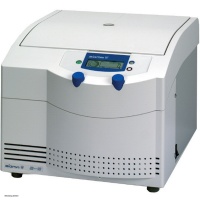
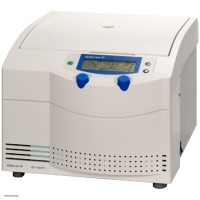
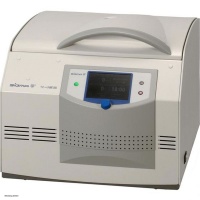
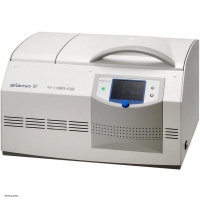
SIGMA 2-6E Small Centrifuge
The SIGMA 2-6E small centrifuge is a reliable and versatile laboratory device that is particularly suitable for demanding applications in research and diagnostics due to its high performance. With its robust design, impressive capacity of up to 4 x 120 ml and a maximum speed of 3900 rpm, this model sets standards in the handling of sensitive samples. An optimised ventilation system, user-friendly controls and flexible rotor options offer a clear advantage over comparable solutions on the market.
Performance overview and advantages
This small centrifuge impresses with numerous features that make it interesting for a wide range of laboratory applications. These include:
- Speed range from 100 to 3900 rpm for fast and efficient separations.
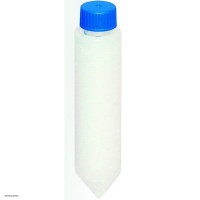
- Wide range of applications thanks to vessel compatibility from 1.5 ml to 120 ml.
- Intuitive microprocessor control with up to 10 programmes and a clear display.
- Short acceleration and braking times (e.g. 15 and 18 seconds with rotor No. 11031).- Continuous operation mode and short run for fast processing of changing samples. - Safety mechanisms such as automatic lid locking and acoustic alarms. - Compliance with the EN 61326 standard for radio interference suppression, enabling interference-free integration into modern laboratory environments.
The device has been specially designed to ensure consistently high performance: overheating protection and a sustainable ventilation system ensure a stable temperature, while a solid housing made of durable materials and a sophisticated rotor design guarantee a long service life.
Technically, the model impresses with a power consumption of 130 W and a maximum kinetic energy of 1610 Nm. With dimensions of 300 x 365 x 452 mm (H x W x D) and a weight of only 20.4 kg without the rotor, it can be flexibly positioned and integrated into existing laboratory configurations. The lid closure system is designed to function smoothly even under intensive use and to ensure the safety of the samples. Areas of application in research and diagnostics
This centrifuge is particularly valued in molecular biology and medicine, where it is used, for example, in DNA research or in the analysis of proteins and biomolecules. Blood banks also benefit from the reliable separation of small and medium sample volumes: plasma and serum can be separated efficiently, which greatly facilitates the preparation of medical tests. Other possible fields of application include routine clinical laboratories, where samples must be processed quickly with high throughput and precise control. The following substances, for example, can typically be separated or processed in this centrifuge: - DNA fragments, for example from PCR reactions.
- Proteins and enzymes in purification or concentration processes. - Blood components such as thrombocytes, plasma and serum. - Cell cultures that need to be processed for diagnostic or research purposes. Frequently asked questions (FAQs)
How do I choose the right rotor?
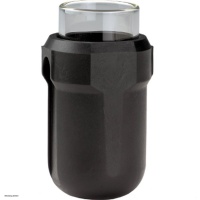
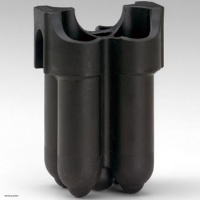
Depending on the type and volume of the samples, the device offers various rotor options such as angle rotors or swing-out rotors. Angle rotors are suitable for fast, efficient separations, while swing-out rotors enable gentle sample separation and can accommodate standard blood collection tubes or microtitre plates.
Is continuous operation without interruption possible?
Yes. The device is suitable for continuous operation as long as the permissible operating conditions - in particular ambient temperature, ventilation and high speed - are observed. Regular maintenance and checks ensure that the device can operate continuously without any loss of performance.
What safety features are available?
An automatic lid lock, acoustic warning signals and the integrated monitoring system ensure highly safe operation. In addition, stable components and an intelligent rotor control system prevent possible imbalances.
What should be taken into account when using the device?
It is important to load and balance the rotors correctly. It is also advisable to check and clean the ventilation openings regularly. Especially with sensitive substances, care should be taken to select a suitable speed and brake curve in order to achieve optimum separation results.
Conclusion
This small centrifuge offers a well-thought-out concept for laboratories that want to perform demanding and versatile centrifugation tasks. It impresses with high speeds, variable rotors, a robust design and certified safety in accordance with EN 61326. Thanks to its flexible programming, integrated overheating protection and large capacity, it is capable of delivering consistent peak performance in both research and diagnostics. This laboratory centrifuge optimises daily workflow and achieves a high level of productivity.