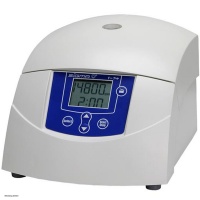
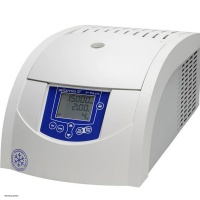
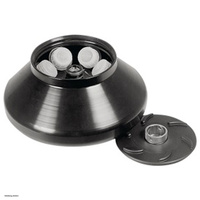
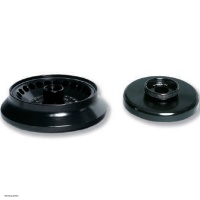
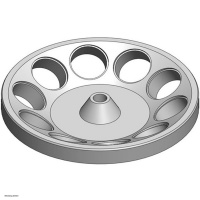
Angle rotor 24 x 1.5/2.0 ml polypropylene for Sigma 1-14, 1-14K
The angle rotor 24 x 1.5/2.0 ml polypropylene for Sigma 1-14, 1-14K is specially designed for use in laboratories that work with small sample volumes and require both precise and efficient results. Whether in molecular biology, biochemistry or clinical diagnostics, this rotor offers the combined strength of high chemical resistance and a sophisticated design that promotes accurate centrifugation results. Professionals benefit from a reliable and durable solution that has proven itself in various application scenarios and thus supports a professional working environment.
Powerful and durable design
The robust design of the polypropylene rotor ensures a long service life and provides reliable protection against corrosion. Even aggressive chemicals have little effect on the material, which means a high level of investment security. This rotor comes with a polysulfone lid that ensures the stability of the samples. Users who regularly handle liquids such as buffer solutions, ethanol or enzymatic preparations benefit from the resistant design and do not lose productivity even under demanding conditions.
In addition, the system impresses with its compatibility with adapters for different tube sizes. This means that even smaller reaction vessels can be used without any problems and without compromising on tightness or centrifuge performance. Maximum reliability in terms of running stability and rotation accuracy is a clear advantage that is crucial in many laboratory processes.
Key technical features and special characteristics
- Capacity: 24 x 1.5/2.0 ml reaction vessels
- Material: polypropylene (rotor), polysulphone (lid)
- Adapter compatibility: 0.25/0.4 ml, 0.5/0.75 ml reaction vessels and 0.2 ml PCR vessels
- Chemical resistance: Designed for contact with many common laboratory chemicals
- Certifications: CE marking and ISO conformity
- Range of applications: DNA, RNA and protein analysis, PCR applications and cell biology studies
- Autoclavable: Can be sterilised at high temperatures without affecting the material structure
These properties make the rotor ideal for a wide range of centrifugation tasks, such as the precise separation of nucleic acids in DNA and RNA extractions or the separation of proteins for high-quality analysis results.
Certifications and standards in the laboratory environment
For use in professional laboratories, it is crucial that products are safe and meet the requirements of common quality standards. With its CE marking, the rotor complies with the relevant European directives, while compliance with ISO-relevant specifications demonstrates a high standard of quality. Such certifications are indispensable, especially in areas such as clinical diagnostic laboratories or research institutes, so that work processes can be implemented reliably and consistently in accordance with standards.
Specific application examples
- Nucleic acid preparation for PCR: Reliable centrifugation of DNA or RNA samples increases purity and yield, which is beneficial for subsequent amplification. - Protein analysis and purification: Many protocols require precise centrifugation steps to concentrate proteins into pellets or separate impurities.
- Cell culture applications: For harvesting or processing cells, the rotor is a robust solution for efficiently separating cell fragments or supernatant liquids.
- Enzymatic assays: High-quality rotation systems are also required when preparing and purifying samples for enzyme tests to ensure reproducible and reliable measurements.
FAQs
What is the maximum speed possible with the rotor?
The operating speed depends on the model. For exact specifications, the manual for the Sigma centrifuge used is the best reference. It contains important details on permissible speeds and settings to ensure safe and consistent results.
Which adapters can be purchased additionally?
Suitable adapters are available for 0.25/0.4 ml, 0.5/0.75 ml reaction vessels and 0.2 ml PCR vessels. This allows the device to respond flexibly to different sample vessels without any loss of time or quality during sample processing.
Can the rotor be sterilised?
Yes, it is autoclavable and therefore ideal for sterile work processes. This aspect is particularly important in areas where freedom from contamination is a prerequisite for reliable results, for example in medical research or diagnostics.
Which centrifuges is the rotor compatible with?
It is precisely matched to the 1-14 and 1-14K models from Sigma Laboratory Centrifuges. This ensures that the rotor fits securely and creates optimal running conditions for uniform sample preparation.
Conclusion
Thanks to its high chemical resistance, robust construction and the option of using a wide variety of adapters, this rotor is ideal for laboratories looking for reliable and flexible centrifugation solutions. It offers a solid combination of durability, efficiency and user-friendly handling. CE and ISO certifications ensure that this rotor complies with current laboratory standards and meets high safety and quality standards. Those who value precise separation processes for small sample volumes will benefit from this product's first-class centrifuge technology, which has proven itself in research and development as well as in routine diagnostics.