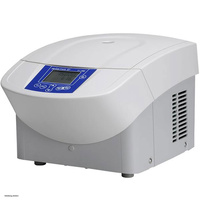
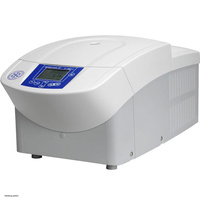
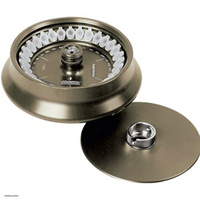
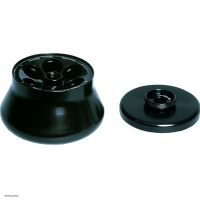
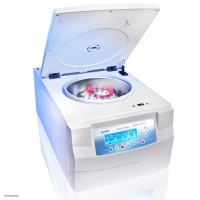
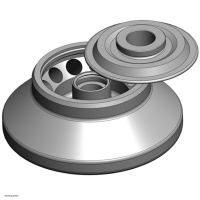
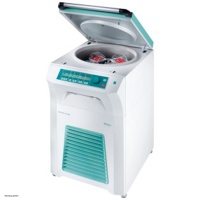
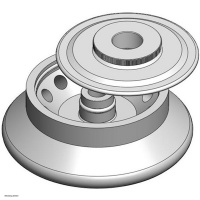
Angle rotor made of polypropylene 24 x 1.5/2.0 ml for Sigma 1-16, 1-16K
The angle rotor from Sigma Laboratory Centrifuges is a high-performance addition for demanding centrifugation processes in modern laboratory environments. It has been specially developed for precise sample processing and impresses with its robust construction and high capacity. Professionals who depend on reproducible results benefit from its sophisticated design, which sets it apart from similar products on the market. In addition, its low weight enables energy-efficient handling without compromising on stability and performance.
High-quality design and performance features
The rotor is made of polypropylene and has a considerable capacity for its size, accommodating 24 x 1.5/2.0 ml reaction vessels. The polysulfone lid supplied ensures optimum protection of the samples by providing a secure seal. In addition, it supports an even distribution pattern of centrifugal force, which enables reliable separation of different components even at high speeds.
Important technical data at a glance:
- Material: polypropylene
- Capacity: 24 x 1.5/2.0 ml
- Lid: polysulphone
- Compatible with: Sigma 1-16, 1-16K
- Certification: CE marking
- Autoclavable for sterilisation processes
The product's chemical resistance to common laboratory reagents makes it a durable choice. Since polypropylene reacts very little with substances, it is ideal for sensitive applications in biotechnology, pharmaceuticals and medicine. At the same time, a smooth inner surface ensures that residues can be removed quickly and easily, which facilitates the validation of internal laboratory hygiene regulations.
The special design guarantees relatively low heat generation at high speeds. This provides better protection for sensitive samples and allows them to be kept stable for longer periods of time. Laboratories that regularly work with demanding samples such as enzymes or temperature-sensitive nucleic acids appreciate the consistent reliability and efficiency of this rotor.
Certifications and standards
Compliance with strict operating guidelines is essential in the laboratory environment. Thanks to its CE marking, the rotor complies with current quality and safety standards. The design has been conceived to ensure smooth compliance with common approval and testing procedures. This gives laboratory professionals the confidence to carry out their daily processes with a product that fully meets the requirements for reliability, durability and safety.
Application examples
An efficient rotor is indispensable for numerous procedures in various fields. Typical applications include:
- DNA and RNA extraction: The rotor enables gentle but effective separation of nucleic acids from cell lysates. - Protein purification: Specific proteins can be concentrated quickly and reliably after cell lysis or precipitation steps.
- Cell culture applications: During cell harvesting or cell washing, the rotor ensures clean and homogeneous cell deposition.
- Diagnostic assays: Its stable and uniform acceleration has proven itself in medical diagnostic analyses in which samples such as blood or serum are centrifuged.
In molecular biology in particular, achieving short centrifugation times is crucial for rapid experiment execution. This rotor facilitates such process optimisations thanks to its smooth operation and compatibility with the Sigma 1-16 and 1-16K centrifuge models (second mention of the product name).
FAQs
Which adapters can be used?
- Individual adapters for a wide range of reaction vessel sizes, including 0.25/0.4 ml
- Adapters for 0.5/0.75 ml sample vessels
- Option for 0.2 ml PCR vessels
Is the model autoclavable?
Yes, thanks to its polypropylene construction, it can be easily sterilised at high temperatures. This reduces the risk of cross-contamination in everyday laboratory work.
What is the best way to clean it?
We recommend using mild detergents in combination with lukewarm water. Strongly aggressive chemicals should be avoided in order to protect the material and surface structure.
What should be taken into account when handling it?
It is advisable to check the rotor for visible damage before each use and to fix it correctly. This contributes to stable performance even at higher speeds.
Conclusion
This rotor offers an impressive combination of reliability, solid material quality and versatile applications. Its robust construction pays off, especially for recurring analyses that depend on reproducible results. Its well-thought-out design saves time during cleaning and allows for easy integration into existing laboratory workflows. For anyone looking for long-lasting support for centrifugation applications, this product is an excellent solution and meets the high demands of modern laboratories.