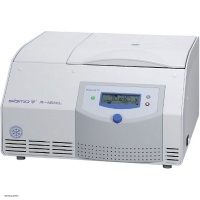
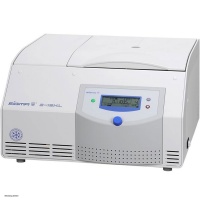
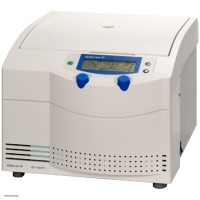
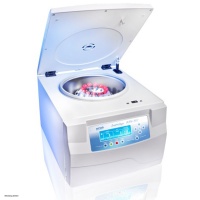
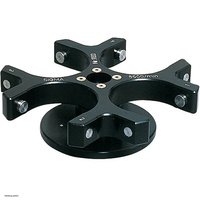
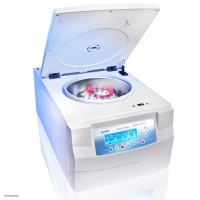
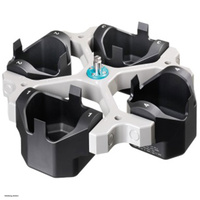
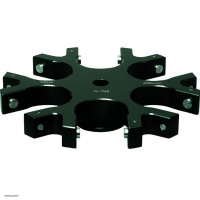
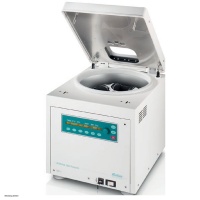
Swing-out rotor 24 x 1.5/2.0 ml for Sigma 2-16P, 2-16KL

Item number: SIGMA_Z0011

EAN: 4064343400527

Category: SIGMA

Manufacturer: Sigma Laborzentrifugen

1.886,00 €

Excluding 19% VAT. , plus shipping (Standard 2500)

(including 19% VAT. 2.244,34 €)


Swing-out rotor 24 x 1.5/2.0 ml for Sigma 2-16P, 2-16KL

This rotor offers laboratories an ideal solution for the precise and rapid centrifugation of a wide variety of samples. Thanks to its stable design, high performance capacities and versatile adapter sets, it is particularly suitable for measurement and analysis procedures in molecular biology, biochemistry and clinical applications. Users benefit from superior speed and large capacity, which enables reliable results in less time - making it an excellent choice compared to similar rotor models.

Performance characteristics and design

Thanks to its swinging design, this rotor ensures uniform separation of samples, as the vessels are positioned horizontally in the gravitational field. This has a particularly positive effect on the separation quality of sensitive cell components or biomolecules. With a capacity of 24 x 1.5/2.0 ml, the model is suitable for extensive routine testing and high-throughput workflows. The interchangeable adapters also allow the use of smaller volumes (0.2 ml, 0.4 ml and 0.5/0.75 ml), which supports flexible planning of laboratory processes.

When used in Sigma 2-16P or Sigma 2-16KL centrifuges, the rotor achieves a maximum speed of up to 14,000 min-¹ and a gravitational force (RCF) of up to 16,215 x g, depending on the device. This allows, for example, DNA samples to be effectively purified after plasmid preparation or proteins to be quickly separated. At the same time, the high centrifugation speed reduces the amount of work required in time-critical areas such as clinical diagnostics, as reactions such as blood analyses or urine sample preparations can be completed in a very short time.

Key technical data at a glance

- Capacity: 24 x 1.5/2.0 ml reaction tubes
- Compatible speeds: up to 12,500 rpm (2-16P) or 14,000 rpm (2-16KL)
- Maximum RCF: up to 12,927 x g (2-16P) or 16,215 x g (2-16KL)
- Variable adapters for centrifuging smaller volumes (0.2 ml, 0.25 ml, 0.4 ml, 0.5 ml)
- Design: Free-swinging for particularly gentle separation of sensitive samples
- Protection and quality: CE marking and ISO certifications
- Areas of application: Molecular biology, biochemistry, clinical diagnostics

The accessories can be easily replaced as required. This allows immediate adaptation to specific tasks such as PCR samples, protein solutions or enzyme assays without having to change the basic device or spend time on major conversion processes.

Certifications and safety

Thanks to CE marking and ISO standards, the model complies with current safety regulations for laboratory equipment. The materials used are durable, corrosion-resistant and easy to clean, which guarantees reliable performance even with intensive use. Users can thus perform both routine and research tasks safely without compromising on precision or speed.

Specific application examples

  1. Molecular biological analyses: For DNA or RNA extractions and PCR-based tests, samples are often prepared in 1.5 or 2.0 ml tubes. With this rotor, even larger sample series can be processed quickly.
  2. Biochemical tests: After digestion processes or enzyme reactions, a large number of samples are produced that need to be effectively clarified or separated, e.g. for the analysis of proteins, lipids or metabolites.
  3. Clinical diagnostics: Blood, plasma or urine samples can be decanted quickly, for example to detect infections, metabolic diseases or to monitor drug levels.
  4. Research and development: In pharmaceutical laboratories or research facilities, cell culture supernatants and protein precipitates, for example, can be processed with high sample throughput.

FAQs

What is the maximum sample capacity?

The rotor can hold up to 24 vessels, each with a volume of 1.5 or 2.0 ml. Adapters for smaller volumes are available if required.

Is the rotor easy to clean?

Yes, cleaning is ideally carried out with a mild detergent and subsequent rinsing with water. The smooth surface makes it easy to remove residues, while regular checks for damage ensure safety.

What special requirements apply to molecular biology applications?

Samples should be handled with as little contamination as possible and cooled if necessary. The high speeds enable rapid pelletisation of nucleic acids, so that sensitive molecules are not exposed to unnecessarily long rotation times.

How often should the rotor be serviced?

A thorough visual inspection is recommended before each use to detect imbalance or material wear at an early stage. In addition, the maintenance intervals recommended by the manufacturer should be observed.

Conclusion

Thanks to its high-quality construction, flexible application options and above-average speeds, this model is a central element in almost every laboratory that relies on efficient centrifugation. Especially in areas such as molecular biology, biochemistry and clinical analysis, the rotor offers excellent separation results and short process times. The swing-out mechanism contributes to the gentle processing of sensitive substances, while the variable adapter selection ensures versatile volumes. If you want reliable and powerful results, this solution is a first-class choice.


Rotor type: swing-out rotor
Shipping weight: 3,00 Kg
Product weight: 3,00 Kg
  Max. rpm [min-1] Max. rcf[
Sigma 2-16P 12.500 max. 12.927 x g
Sigma 2-16KL 14.000 max. 16.215 x g


Information on product safety
Manufacturer information:
SIGMA Laborzentrifugen GmbH
An der unteren Söse 50
37520 Osterode, Deutschland
[email protected]
Responsible person:
Mr. Schuldt
0049 30 403 667 940
[email protected]