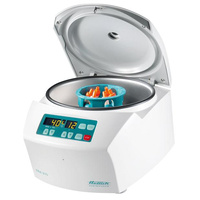
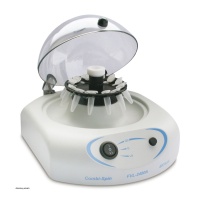
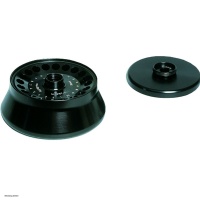
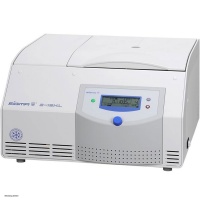
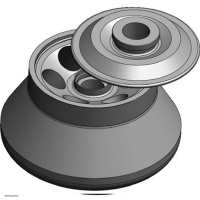
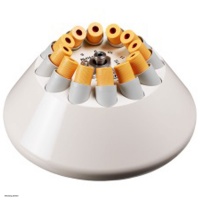
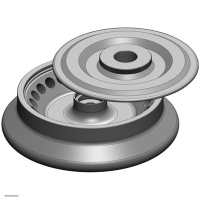
Hettich 8-place angle rotor for small centrifuges
The Hettich 8-place angle rotor is an essential accessory for modern laboratories that value precise and time-efficient centrifugation. Developed by Andreas Hettich, this rotor is one of the most sought-after components in the field of medical diagnostics, especially for tasks in blood group serology or biomedical research. Compared to alternative rotor types, it sets standards in terms of sedimentation speed, reliability and user comfort. Its special design enables reliable separation of samples and significant optimisation of laboratory processes. Performance, function and quality features
Designed for demanding use in medical and life science laboratories, the rotor impresses with its robust, durable construction and maximum reliability over many operating cycles. The angular design of the rotor ensures maximum efficiency and significantly reduced centrifugation times, as the sedimentation path of the samples is kept to a minimum.
Key technical features at a glance:
-
Rotor type: Angle rotor for eight samples
-
Maximum capacity: 8 sample vessels of different types (e.g. microcentrifuge tubes, blood collection tubes)
-
Suitable applications: Blood group serology, biomedical and clinical research, diagnostics
-
Material: High-quality, corrosion-resistant metal alloys for extreme durability and long service life
-
Maximum speed: Designed for higher speeds, enabling rapid sedimentation processes
-
Compatibility: Suitable for various Hettich small centrifuge models
-
Safety features: Mechanical lock, imbalance detection (depending on the device model used)
The rotor supports centrifugation processes at gravitational fields of over 60,000 x g - setting new standards in terms of efficiency and reliability. Its solid construction ensures both safe operation and uncomplicated maintenance. The improvement in sedimentation speed significantly optimises everyday laboratory work, as routine processes such as blood separation or cell pelletisation are faster and more reproducible.
A special feature of this rotor is the specific arrangement of the mounting holes, which ensures even loading and thus low-vibration operation. The resulting reduction in wear contributes to the rotor's value retention and consistently high performance.
Certifications and standards
Andreas Hettich adheres to the highest quality standards in development and manufacturing. The rotor model is fully CE certified and meets the current safety requirements for laboratory environments. In addition, relevant ISO standards for laboratory equipment are complied with and documented, which not only simplifies product and user safety, but also long-term documentation and compliance.
-
CE marking: Complies with European safety guidelines for laboratory equipment
-
ISO compliance: Comprehensive quality management according to ISO standards for laboratory equipment
Specific practical application examples
The angle rotor has a wide range of applications and is ideal for typical laboratory tasks that require efficiency, precision and safety:
-
Blood group serology: Fast and reliable separation of erythrocytes, plasma and serum components for blood group-specific diagnostic tests.
-
Clinical diagnostics: Preparation of blood samples for analysis of, for example, haematocrit, plasma or cell content.
-
Biomedical cell research: Separation of cell pellets from cell culture media, processing of bacterial or yeast cells for further analysis or product extraction.
-
Molecular biology protocols: Concentration of DNA, RNA or protein samples after extraction steps, e.g. from bacterial lysates or blood samples.
Typical substances that are centrifuged in connection with these applications include: venous or capillary blood, cell cultures, bacterial suspensions, extracted nucleic acids and diagnostic buffer substances.
FAQs
Installation: What needs to be considered when mounting the angle rotor?
- Remove the existing rotor from the centrifuge.
- Place the angle rotor on the rotor holder and secure it with the screw or quick-release fastener provided.
- After securing, check that it is tight and free of play.
Suitable vessels: Which sample tubes can be used?
- Microcentrifuge tubes (1.5/2.0 ml), blood collection tubes and serological test tubes adapted to the rotor holder are suitable.
Maintenance and cleaning: What is the best way to care for the device?
- Clean with warm water and a mild laboratory cleaner after each use.
- Dry the rotor thoroughly to prevent corrosion.
- Regularly check for damage or material fatigue.
Safety: What protective measures are necessary during use?
- The total load must be evenly distributed.
- Always use suitable adapters for different tube types.
- Do not exceed the maximum permissible speed of the centrifuge.
Conclusion
The 8-place angle rotor from this renowned manufacturer impresses with its robust workmanship, versatile compatibility and maximum user-friendliness in everyday laboratory work. For applications related to blood group determination, clinical diagnostics and cell research, it offers stable, reproducible results and a noticeable reduction in process times. With CE certification and compliance with relevant ISO standards, it meets all requirements for safe and effective use in demanding laboratory environments.