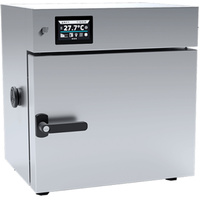
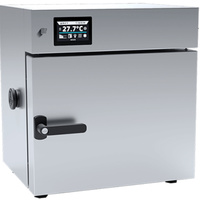
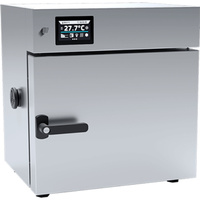
PHOENIX Instrument TIN-IN Series Incubator
The PHOENIX Instrument Incubator TIN-IN Series was developed for professional laboratory applications where precise heating and constant temperature control of biological samples is essential. Users in microbiology, cell culture technology and quality control appreciate the exceptional temperature stability and high homogeneity inside the chamber. Compared to conventional laboratory incubators, the product scores highly thanks to its energy-efficient design, excellent insulation and versatile, convenient programming concept. This makes the TIN-IN Series the preferred choice for laboratories that demand precision, safety, flexibility and documented traceability in incubation processes.
Innovative technology and practical design
An outstanding feature of this series is the selection of models with different capacities - from 16 to 200 litres - which can be optimally adapted to a wide range of laboratory requirements. Thanks to natural air circulation, the temperature is distributed extremely evenly, without any disruptive turbulence caused by additional recirculation fans. The solid, insulated door - with integrated viewing window or as a double door, depending on the model - allows samples to be observed without losing valuable heat.
Technical highlights at a glance:
- Temperature control up to +7 °C with an accuracy of 0. °C
- Temperature homogeneity at 37 °C: ±0.4 °C to ±0.5 °C
- Very low temperature deviation: ±0.3 °C
- Fast heating times (18-35 minutes depending on model)
- Flexible interior design: 2 to 9 variably positionable shelf inserts
- Time function for programmable cycles (up to max. 99:59 h) and continuous operation
- Safety features: overheating protection, alarm function and safety class 2
Further product details are precisely tailored to everyday laboratory use: the backlit control panel provides a clear overview of all parameters and allows intuitive operation - either in the basic version with LCD or as a super series with state-of-the-art colour touchscreen and USB data interface for comprehensive documentation. The devices are characterised by their tested operational safety, which is documented by an individual test certificate for each incubator. The sophisticated insulation contributes to exceptionally good energy efficiency, significantly minimising operating costs and environmental impact.
Details on the model variants:
-
Basic series: 7 programmes (10 steps each), programmable fan speed, alarm, repeat and start delay
-
Super series: Touchscreen, 8 plus 1 basic programme, comprehensive programme memory, USB port for unlimited data recording, direct documentation on the device
Additional technical specifications (depending on model):
- Volume: 16, 35, 55, 120 or 200 litres
- Minimum distances between shelves: 25-50 mm
- Max. load per shelf: 5-10 kg
- Connection: 230 V, power between 85 W and 600 W
- Dimensions (internal): W × H × D up to 610 × 600 × 575 mm
- Safety class 2: compliance with all relevant standards, tested and documented
Compliance with certifications and standards
The incubators meet the requirements of safety class 2 in accordance with applicable laboratory and EMC standards. Each device comes with a detailed test certificate documenting compliance with all safety-related parameters. This makes them suitable not only for research, but also for regulated work areas such as pharmaceutical and food laboratories.
Typical areas of application and examples of use
-
Germination experiments in plant research: Temperature-controlled environment for the controlled cultivation of cereal or vegetable seedlings.
-
Microbiological investigations in the food sector: Incubation of bacterial cultures (e.g. salmonella, lactobacilli) at specific temperatures.
-
Cell culture research: Stable, fluctuation-free conditions for cultivating and observing animal cell lines at 3 °C.
-
Quality control in the pharmaceutical and cosmetics industries: Incubation and stability testing of temperature-sensitive substances (creams, lotions, pharmaceutical solutions).
In addition, the devices are suitable for the controlled storage and process control of enzyme reactions, shelf life tests on biological and chemical samples, and the incubation of environmental samples, yeasts, moulds or pathogenic microorganisms.
FAQs
How accurately can the temperature be set and monitored?
Thanks to the high-precision control system, the temperature can be set with an accuracy of up to 0.1 °C. The display allows all operating parameters to be monitored reliably.
Is unattended operation permitted in long-term studies?
Yes, the devices have safety features such as overtemperature protection and alarms. Unattended operation is therefore safe, but random checks are recommended in accordance with laboratory guidelines.
What data can be documented?
The Super models offer a comprehensive documentation option via a USB port: all relevant operating data and histories can be stored externally and evaluated at a later date.
How flexible can the interior be adapted?
Inserts can be freely positioned in height to accommodate containers, trays or bottles of different sizes. The maximum load per shelf is up to 10 kg, depending on size.
What are the differences between the Basic and Super series?
The Basic series offers an LCD display and multi-step programming. The Super models offer a touchscreen, expanded programme memory and seamless data logging options via USB.
Conclusion
The TIN-IN series from PHOENIX Instrument sets standards in terms of precision, flexibility and user comfort. Their outstanding temperature homogeneity, versatile programming, high safety and energy efficiency make them the ideal solution for demanding tasks in research, industry and quality assurance. The selection of different sizes and programme functions guarantees individual adaptation to every laboratory requirement, so that both routine and special applications can be carried out optimally at any time.