FRITSCH PULVERISETTE 23 Mini Mill

Item number: FRI_12008

EAN: 4064343358187

Category: Mills

Manufacturer: FRITSCH

starting from 4.003,82 €

Excluding 19% VAT. , plus shipping (Standard 2500)

(including 19% VAT. 4.764,55 €)


FRITSCH PULVERISETTE 23 Mini Mill

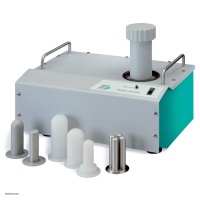
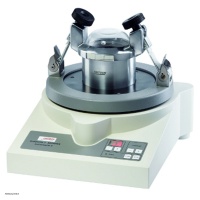
For high-precision grinding tasks in modern laboratories, the FRITSCH PULVERISETTE 23 Mini Mill enables safe, efficient and reproducible processing of even the smallest sample quantities. Designed for applications in chemistry, biology, pharmacy and materials research, this vibrating ball mill impresses with maximum flexibility in terms of grinding bowl sizes, material compatibility and excellent final fineness. Compared to other tabletop ball mills, it stands out with its compact design, energy-efficient operation, wide selection of grinding tools and special ability to cryogenically grind temperature-sensitive samples. Performance features and technical highlights

Equipped to meet the highest demands of everyday scientific laboratory work, the compact mini mill can be used universally for everything from routine analyses to high-end research tasks. Its robust components, versatile configurations and user-friendly controls set standards in precision and flexibility:

Key technical data at a glance:

  • Final fineness up to 5 µm thanks to efficient oscillating grinding process with up to 3,000 oscillations/min at 9 mm amplitude
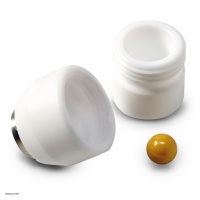
  • Selectable grinding beaker sizes: 5, 10 or 15 ml, for minimum sample quantities from 0.01 ml to a maximum of 5 ml
  • Versatile grinding ball diameters: 0.1 to 15 mm
  • Grinding process optionally dry, wet or cryogenic with PTFE beaker (pre-cooled in liquid nitrogen)
  • Variable materials for grinding beakers and balls: zirconium oxide, stainless steel, hardened steel, PTFE
  • Compact size (20 x 30 x 30 cm), tabletop device weighing only 7 kg
  • Connection values: 100-240 V, 50-60 Hz, 90 W power consumption

Other key features include tool-free replacement of grinding jars/balls, easy operation and cleaning, precisely adjustable grinding time (typically 2 minutes, can be changed depending on the material) and exceptional user-friendliness with a small footprint.

A unique feature of the mini mill is the problem-free cryogenic grinding of sensitive samples. By pre-cooling the PTFE grinding jar in liquid nitrogen, samples that are not stable at higher temperatures, e.g. biological tissue or temperature-sensitive chemical compounds, can be processed.

Certifications and standards for laboratory safety

The highest standards in terms of safety and quality control are guaranteed by CE certification and compliance with all relevant DIN standards for laboratory mills. The mini mill meets the most stringent requirements for electrical and mechanical safety as well as operational safety in the laboratory, making it ideal for regulated areas of application.

Typical areas of application with practical examples

This ball mill opens up numerous application possibilities in analytical and research-oriented laboratories, particularly in the fields of materials science, chemistry, biology, pharmaceuticals and food analysis. Typical examples include:

  • Homogenisation of biological source material: plant tissue, animal or cell samples (e.g. for DNA/protein extraction)
  • Grinding of ceramic materials and alloys for structural and phase analysis
  • Cryogenic comminution of elastomers, temperature-sensitive plastics or low-molecular pharmaceutical substances
  • Comminution of powder samples, crystals or mineral components for quality control or trace analysis

Specific substances that are frequently processed: quartz, calcium carbonate, titanium oxide, polymers, proteins, plant leaves and active pharmaceutical ingredients.

In addition, the mini mill can be used for sample preparation in forensic analysis or environmental monitoring, for example in soil and sediment laboratories.

FAQs about the FRITSCH mini mill

How does cryogenic grinding work in the mill?

The PTFE grinding beaker is pre-cooled in liquid nitrogen before the grinding process begins. The sample is added and homogenised at an extremely low temperature without thermal decomposition occurring.

What materials are available for the grinding jars and balls?

Depending on the contamination risk and the type of sample, grinding jars and balls made of zirconium oxide, stainless steel, hardened steel or PTFE are available.

How do I ensure the optimum final fineness?

The desired fineness (up to 5 µm) is achieved by adjusting the grinding ball diameter, the grinding time and the vibration frequency. Material-dependent preliminary tests are recommended.

What sample quantities can be processed?

Samples of 0.01 ml to 5 ml can be processed; selecting the appropriate beaker size and number of balls allows for optimum utilisation depending on the sample volume.

Is the PULVERISETTE 23 compatible with laboratory safety standards?

Yes, it is CE-compliant, meets all current DIN standards for laboratory equipment and ensures maximum user safety thanks to secure locking and electrical protection measures.

Conclusion

With its exceptional precision, versatility and user-friendliness, this laboratory mill offers an optimal combination of compact design, wide range of material applications and state-of-the-art safety technology. Thanks to its adaptability and high energy efficiency, it is just as suitable for routine laboratory work as it is for demanding research projects, especially when grinding small and sensitive sample quantities.


Mills Appliance type: ball mill
Process type: batch
Shipping weight: 8,00 Kg
Product weight: 6,00 Kg
Working principle Impact force
Grinding bowl sizes 5, 10, 15 ml
Grinding ball diameter 0.1 - 15 mm

Grinding tools

Grinding bowls (5, 10, 15 ml) and grinding balls (0.1 - 15 mm)
Max. feed size (depends on material) 6 mm  

Min. sample quantity

0,01 ml  

Max. sample quantity

5 ml 
Final fineness (depending on material) 5 µm 
Typical grinding time (depending on the material) 2 min  

Cryogenic grinding

Liquid nitrogen can be used for pre-cooling in the PTFE bowl
Grinding process Dry / wet

Grinding bowl oscillations per minute

900 - 3000 at 9 mm amplitude
Materials of the grinding tools Zirconium oxide, stainless steel, hardened steel, PTFE
Electrical details 100-240 V/1~, 50-60 Hz, 90 watt
Weight 7 kg 
Dimensions (W x D x H) Bench top instrument 20 x 30 x 30 cm
Information on product safety
Manufacturer information:
Fritsch GmbH
Industriestraße 8
55743 Idar-Oberstein, Deutschland
[email protected]
Responsible person:
Mr. Schuldt
0049 30 403 667 940
[email protected]
Accessories PULVERISETTE 23
Your selection
1 FRITSCH PULVERISETTE 23 Mini Mill 4.003,82 €

Total: